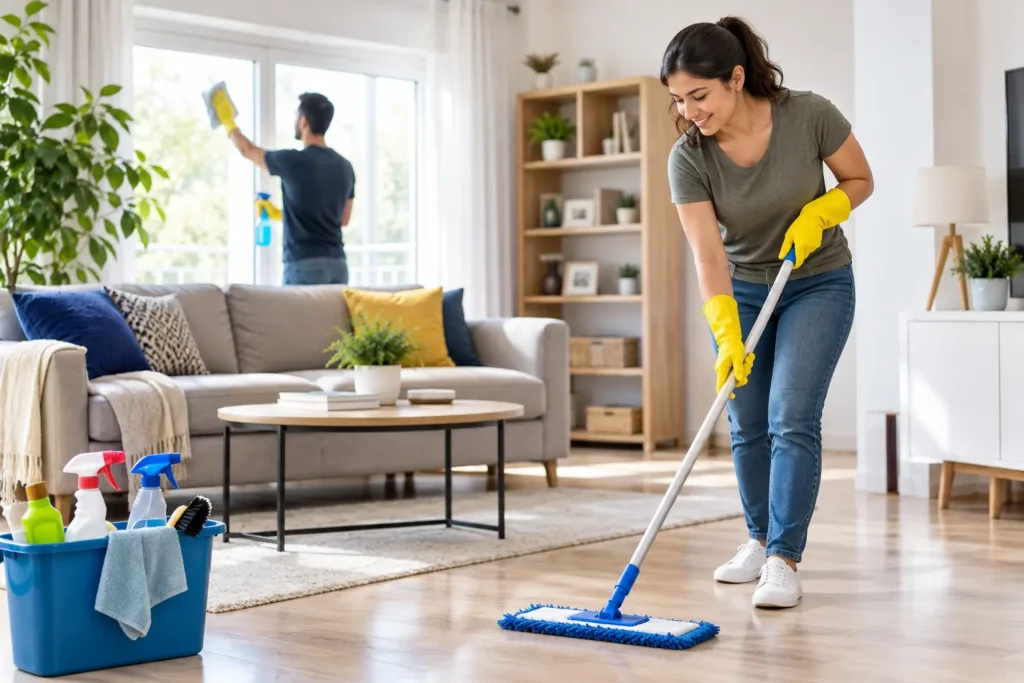
Deep cleaning house tasks can make a big difference when regular cleaning is no longer enough. Dust can collect behind furniture, grease can build up in the kitchen, soap residue can stay in the bathroom, and areas such as skirting boards and window frames can easily be forgotten.
A deep clean gives your home a more thorough refresh. Instead of only cleaning the surfaces you use every day, you work through the less obvious areas where dirt, dust and grime can build up over time.
This room-by-room guide explains how to deep clean your home, what areas to focus on and when professional help may make the job easier.
What Is Deep Cleaning a House?
Deep cleaning house means cleaning areas that are not always covered during a normal cleaning routine. It can include appliances, skirting boards, windows, furniture, cupboards, hard-to-reach areas and built-up grime.
Regular cleaning helps keep your home tidy from week to week. Deep cleaning goes further by giving extra attention to areas that may only need cleaning every few months or when your home needs a full refresh.
A deep clean may include:
- Dusting hard-to-reach areas
- Cleaning skirting boards
- Wiping doors and door frames
- Cleaning cupboards and drawers
- Washing windows and window frames
- Cleaning appliances
- Scrubbing bathroom surfaces
- Vacuuming furniture and upholstery
- Removing cobwebs
- Mopping floors
- Cleaning high-touch surfaces
- Removing built-up dirt and
AP Services lists tasks such as appliance cleaning, carpet shampooing, dusting, surface disinfection, window washing, mopping, vacuuming and upholstery cleaning as part of its deep cleaning services.
Deep Cleaning House vs Regular Cleaning
The main difference is the level of detail. Regular cleaning focuses on keeping your home clean and manageable, while a deep clean spends more time on areas that are often missed.
For example, regular cleaning may include vacuuming the floor and wiping kitchen benches. A deep clean can also include cleaning inside cupboards, wiping skirting boards, cleaning appliances and removing grime from less visible areas.
1. Regular cleaning usually includes
- Vacuuming and mopping
- Dusting common surfaces
- Cleaning kitchen benches
- Cleaning bathroom surfaces
- Emptying rubbish
- Basic surface wiping
2. Deep cleaning usually goes further
- Cleaning behind and around furniture
- Cleaning skirting boards
- Detailed kitchen cleaning
- Detailed bathroom scrubbing
- Cleaning doors and frames
- Cleaning window frames
- Cleaning cupboards and drawers
- Cleaning furniture and upholstery
- Tackling built-up dirt and grime
If your home has not had a detailed clean for some time, a deep clean can be a useful way to reset your cleaning routine.
How to Deep Clean a House Room by Room
The easiest way to manage a large cleaning job is to work one room at a time. Start from the top of each room and work down so that dust and dirt do not fall onto areas you have already cleaned.
Before you begin, remove clutter and prepare your cleaning supplies. Having everything ready can save time and help you stay focused.
1. Deep Clean the Kitchen
The kitchen can collect grease, food residue and dust quickly because it is used so often. Start by clearing the benches and removing items from areas that need to be cleaned.
Wipe surfaces first, then work on appliances, cupboards, sinks and floors. Pay extra attention to handles, splashbacks and other high-touch areas.
Kitchen deep cleaning checklist :
- Clear benches and kitchen surfaces
- Wipe cabinets and cupboard doors
- Clean cupboard handles
- Clean the sink and taps
- Wipe the splashback
- Clean the stovetop
- Clean the range hood
- Wipe the outside of appliances
- Clean the inside of the microwave
- Clean the oven where required
- Vacuum or sweep the floor
- Mop the floor
- Remove rubbish and wipe the bin area
For a detailed appliance clean, you can also explore the AP Services oven cleaning service, which covers areas such as the stovetop, fan, knobs, grill, trays, door, glass and racks.
2. Deep Clean the Bathroom
Bathrooms need regular attention because moisture, soap residue and dirt can build up on many surfaces. A deep clean should cover both the obvious areas and the smaller details.
Clean from higher surfaces down to the floor. Give extra attention to taps, shower screens, tiles, handles, cupboards and other areas that are touched regularly.
Bathroom deep cleaning checklist :
- Remove items from the vanity
- Clean the vanity and sink
- Scrub the shower
- Clean the shower screen
- Clean tiles
- Wipe taps and handles
- Clean the bathtub
- Clean the toilet
- Wipe cupboard doors
- Clean inside accessible cupboards
- Wipe mirrors
- Remove cobwebs
- Clean the exhaust fan
- Mop the floor
If you notice mould that keeps returning, leaks or damp areas, deal with the underlying moisture problem rather than relying only on repeated cleaning. Australian Government guidance also recommends professional advice for larger areas of mould or repeated mould growth.
3. Deep Clean the Bedrooms
Bedrooms can collect dust in bedding, carpets, furniture and areas that are not cleaned every week. Start by removing clutter so you can reach more surfaces.
Dust from high areas downwards, then vacuum the floor and furniture. Wash bedding regularly and pay attention to areas underneath and around the bed.
Bedroom deep cleaning checklist :
- Change and wash bedding
- Dust bedside tables
- Wipe wardrobes and cupboard doors
- Clean mirrors
- Dust lamps and fixtures
- Wipe doors and handles
- Clean skirting boards
- Vacuum under the bed
- Vacuum carpets
- Clean accessible window areas
- Remove cobwebs
Healthdirect notes that dust mites commonly occur in bedrooms, bedding, mattresses and upholstered furniture, and recommends regular bedding care and damp dusting as ways to reduce dust mites.
4. Deep Clean the Living Room
The living room can look clean while dust is still hiding underneath furniture and around upholstery. Move smaller items where possible so you can clean the areas that are normally difficult to reach.
Vacuum sofas and other upholstery according to the manufacturer’s care instructions. Then clean tables, shelves, skirting boards, doors and floors.
Living room checklist :
- Dust shelves
- Wipe tables
- Clean TV cabinets
- Dust lamps
- Vacuum sofas
- Clean upholstery where suitable
- Vacuum under furniture
- Clean skirting boards
- Wipe doors and handles
- Clean window areas
- Remove cobwebs
- Vacuum and mop the floor
5. Deep Clean the Laundry
The laundry is easy to forget because it is mainly used for washing clothes. However, lint, dust, moisture and detergent residue can build up around appliances and surfaces.
Clean the sink, cupboards, floor, skirting boards and accessible areas around your washing machine and dryer.
Laundry checklist :
- Wipe the washing machine exterior
- Clean accessible areas around appliances
- Wipe cupboards
- Clean the laundry sink
- Wipe taps
- Clean skirting boards
- Remove dust from vents
- Clean the floor
- Mop the floor
- Check for damp areas
6. Deep Clean Hallways and Entry Areas
Hallways receive plenty of foot traffic but may not receive the same attention as kitchens and bathrooms. Dirt can collect along corners, skirting boards, door frames and floors.
Vacuum the hallway carefully and wipe high-touch points such as door handles, switches and other frequently touched surfaces.
Hallway checklist :
- Remove cobwebs
- Dust walls where appropriate
- Wipe door handles
- Clean light switches
- Clean door frames
- Wipe skirting boards
- Vacuum corners
- Vacuum floors
- Mop hard floors
Areas People Often Forget During a Deep Clean
Some of the dirtiest-looking areas are easy to spot, but other areas can be forgotten during normal housework. These small areas can make a noticeable difference when you are trying to give your home a full refresh.
Check behind furniture, underneath beds, around door frames, along skirting boards and inside cupboards. Also look at handles, switches, vents and other high-touch areas.
Do not forget these areas :
- Behind furniture
- Under beds
- Under sofas
- Skirting boards
- Door frames
- Window frames
- Light switches
- Door handles
- Cupboard handles
- Vents
- Ceiling fans
- Appliance surfaces
- Furniture upholstery
- Corners and edges
- Rubbish bins
High-touch areas deserve particular attention because they are handled regularly. Australian Government cleaning guidance identifies surfaces such as door handles, light switches, taps, bathroom fixtures and kitchen surfaces as areas that may need regular cleaning and disinfection.
How Often Should You Deep Clean Your House?
There is no single schedule that works for every home. The right timing depends on how many people live in the property, pets, daily activity, dust levels and how often regular cleaning is carried out.
Many households can benefit from a deeper clean every few months, while homes with pets, children or heavier daily use may need extra attention more often.
You may want to consider a deep clean when:
- Your home has not had a detailed clean for several months
- Dust is building up in hard-to-reach areas
- You are preparing for guests
- You are preparing to move
- You have completed renovations
- You want to refresh the home after a busy period
- Your regular cleaning routine is not reaching every area
Safe Cleaning Tips for Your Home
Good cleaning is not only about getting better results. It is also about using products correctly and protecting the people, pets and surfaces inside your home.
Always read the product label before using a cleaning chemical. Do not mix different cleaning products unless the manufacturer specifically says they can be combined.
The NSW Environment Protection Authority recommends reducing unnecessary chemical use where possible and taking care when using, storing and disposing of household chemicals.
Keep these safety tips in mind :
- Read product labels before use
- Follow recommended dilution instructions
- Keep cleaning products away from children
- Keep chemicals away from pets
- Open windows when appropriate
- Wear suitable protective equipment when required
- Never mix cleaning chemicals without checking the instructions
- Test products on suitable surfaces when needed
- Follow manufacturer instructions for appliances and furniture
When Should You Hire Professional Deep Cleaning Services?
A professional clean can be useful when the job is too large to manage comfortably or when you need more detailed cleaning than your normal routine provides.
Professional cleaners can also help when you are preparing a property for a move, dealing with a very busy schedule or simply want a thorough reset of the home.
AP Services provides deep cleaning house in Sydney and lists services including dusting, appliance cleaning, window washing, upholstery cleaning, surface sanitising, vacuuming and mopping.
You may want professional help if:
- You do not have enough time for a full deep clean
- The home has built-up dirt and grime
- You are moving into a property
- You are moving out of a property
- You need help after construction or renovation work
- You want a one-time detailed clean
- You need several cleaning tasks handled together
For homes preparing for a move, AP Services also provides move-in and move-out cleaning, with cleaning tasks covering kitchens, ovens, bedrooms, hallways, bathrooms and laundry areas.
How to Prepare for a Deep Clean
A little preparation can make the cleaning process easier. Start by putting away personal items, clothes, toys and anything else that may be sitting on surfaces.
You do not need to clean the house before the cleaners arrive. Instead, focus on reducing clutter so more surfaces and floor areas are accessible.
Before the cleaning begins :
- Put away personal belongings
- Clear kitchen benches
- Remove unnecessary items from floors
- Put clothes away
- Organise toys and small items
- Empty areas that need detailed cleaning
- Tell the cleaner about special requirements
- Identify delicate surfaces or materials
- Keep pets in a safe area if needed
Conclusion
A deep clean does not have to mean cleaning everything in one day. Breaking the work into rooms makes the job easier and helps you notice areas that may have been missed during regular cleaning.
Start with the rooms that need the most attention and work from high surfaces down to the floor. If the job is too large or you simply do not have the time, professional cleaners can take care of the detailed work.
For Sydney households looking for help, AP Services’ deep cleaning house service provides a range of detailed cleaning tasks for homes and other properties. You can also view AP Services’ Sydney service area to see the areas covered.
If you are ready to arrange a professional clean, you can contact AP Services to discuss your cleaning needs.
Frequently Asked Questions (FAQs)
What is included in deep cleaning a house?
Deep cleaning can include detailed dusting, appliance cleaning, bathroom scrubbing, kitchen cleaning, window washing, upholstery cleaning, floor cleaning and hard-to-reach areas that may not be covered during regular cleaning.
How often should I deep clean my house?
The ideal schedule depends on your home and lifestyle. Many households can benefit from a deeper clean every few months, with additional cleaning when the home becomes heavily soiled or needs a full refresh.
What is the difference between deep cleaning and regular cleaning?
Regular cleaning focuses on routine tasks that keep your home tidy. Deep cleaning spends more time on built-up dirt, appliances, skirting boards, cupboards, furniture, window areas and other less frequently cleaned spaces.
Should I clean before a deep cleaning service?
You do not need to clean the property before a deep cleaning service. It is helpful to remove clutter and personal items so cleaners can reach more surfaces and floor areas.
Can deep cleaning help before moving house?
Yes, a detailed clean can help prepare a property before you move in or after you move out. AP Services offers dedicated move-in and move-out cleaning services for Sydney properties.